Benefits of Building Blocks: Why Every Child Should Have This Educational Toy
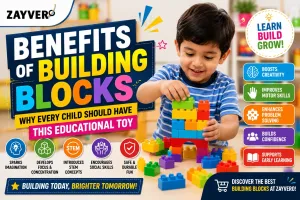
Benefits of Building Blocks: Why Every Child Should Have This Educational Toy
Building blocks have been a favorite educational toy for generations, and for good reason. While they may seem like simple toys, building blocks play a vital role in a child's overall development. From improving creativity and problem-solving skills to strengthening hand-eye coordination and fine motor skills, these versatile toys offer countless learning opportunities while keeping children entertained.
Today's building block sets come in many shapes, sizes, and themes, making them suitable for toddlers, preschoolers, and older children alike. Whether your child enjoys constructing colorful towers, designing imaginative cities, or building vehicles and animals, every creation contributes to valuable cognitive and physical development.
In this complete guide, we'll explore the benefits of building blocks, explain how they support learning at different ages, discuss the various types of building blocks available, and help you choose the perfect set for your child.
Why Building Blocks Are More Than Just Toys
Unlike many toys that offer limited interaction, building blocks encourage children to think, imagine, experiment, and solve problems independently. Every structure they build requires planning, patience, and creativity.
Building blocks combine fun with education by allowing children to learn through hands-on play rather than passive observation.
Parents and educators around the world consider building blocks one of the best early learning toys because they help children develop essential life skills naturally through play.
Top Benefits of Building Blocks
1. Improves Creativity and Imagination
One of the biggest benefits of building blocks is that there are no limits to what children can create.
With a simple set of blocks, kids can build:
- Castles
- Houses
- Bridges
- Robots
- Animals
- Cars
- Space stations
- Entire cities
Unlike toys with fixed functions, building blocks encourage children to invent their own stories and designs, helping develop creativity from an early age.
2. Develops Fine Motor Skills
Picking up, stacking, connecting, and balancing blocks requires precise hand movements.
These activities strengthen:
- Finger muscles
- Hand control
- Grip strength
- Coordination between hands and eyes
Fine motor development prepares children for future tasks like writing, drawing, using scissors, and buttoning clothes.
3. Enhances Problem-Solving Skills
Building doesn't always go according to plan. Towers fall, bridges collapse, and designs need adjustments.
Children learn to ask questions like:
- Why did it fall?
- How can I make it stronger?
- Which block fits best?
This trial-and-error process develops logical thinking and problem-solving abilities that are useful throughout life.
4. Encourages STEM Learning
Building blocks introduce children to basic STEM concepts without making learning feel like school.
They naturally explore:
- Balance
- Gravity
- Symmetry
- Engineering
- Architecture
- Measurement
- Shapes
- Spatial reasoning
These early experiences help develop an interest in science, technology, engineering, and mathematics.
5. Improves Concentration
Building a structure requires focus and patience.
Children learn to:
- Follow plans
- Stay focused
- Complete projects
- Pay attention to details
Longer periods of focused play contribute to better concentration in school and everyday activities.
6. Supports Social Skills
Building blocks become even more enjoyable when children play together.
Group building activities teach:
- Sharing
- Communication
- Teamwork
- Taking turns
- Leadership
- Cooperation
These social skills are essential for classroom learning and friendships.
7. Builds Confidence
Completing a building project gives children a sense of achievement.
Each successful creation boosts confidence and encourages them to take on more challenging designs in the future.
Celebrating these small successes helps build a positive attitude toward learning and problem-solving.
8. Improves Spatial Awareness
Children begin to understand how objects relate to one another in space.
They learn concepts such as:
- Above
- Below
- Beside
- Inside
- Outside
- Height
- Width
- Balance
Spatial awareness is valuable for subjects like mathematics, geometry, and even sports.
Choosing the Right Building Blocks
Selecting the right building block set depends on your child's age and interests.
Age GroupRecommended Building Blocks1–3 YearsLarge, soft, easy-to-grip blocks3–5 YearsColorful plastic building blocks5–8 YearsConstruction-themed building sets8+ YearsAdvanced STEM building kits
Always choose age-appropriate sets with safe, non-toxic materials.
Different Types of Building Blocks
Wooden Building Blocks
- Durable
- Eco-friendly
- Classic design
- Excellent for toddlers
Plastic Building Blocks
- Bright colors
- Easy to connect
- Available in many themes
- Suitable for all ages
Magnetic Building Blocks
- Encourage creativity
- Easy assembly
- Great for geometric learning
STEM Construction Sets
- Introduce engineering concepts
- Encourage advanced problem-solving
- Suitable for older children
Building Block Activities for Kids
Parents can make learning even more engaging with simple activities.
Try these ideas:
- Build the tallest tower.
- Create a zoo using blocks.
- Build a bridge that supports toy cars.
- Make letters and numbers.
- Copy a design from a picture.
- Build houses for toy animals.
- Create colorful patterns.
- Design your dream playground.
These activities combine creativity with educational value.
Safety Tips
To ensure safe play:
- Choose BPA-free materials.
- Follow age recommendations.
- Supervise toddlers during play.
- Keep small pieces away from babies.
- Store blocks in a container after use.
- Clean blocks regularly.
Safety helps children enjoy building without unnecessary risks.
Common Mistakes Parents Make
Avoid these common buying mistakes:
- Buying sets with pieces that are too small.
- Choosing overly complex kits for beginners.
- Ignoring material quality.
- Buying based only on appearance.
- Not considering storage options.
- Choosing sets without expansion possibilities.
Selecting the right building block set provides better long-term value.
Why Educational Toys Matter
Educational toys help children learn naturally through play.
Compared to passive entertainment, toys like building blocks encourage:
- Independent thinking
- Creativity
- Communication
- Curiosity
- Physical activity
- Confidence
Building blocks continue to be one of the most recommended educational toys because they grow with the child and remain engaging for years.
Quick Buying Checklist
Before purchasing building blocks, check the following:
✔ Age appropriate
✔ Safe materials
✔ Durable construction
✔ Easy to clean
✔ Colorful and attractive
✔ Enough pieces for creativity
✔ Compatible with future expansion
✔ Good storage solution