Best Outdoor Toys: A Complete Guide to Getting Kids Off Screens and Into Play
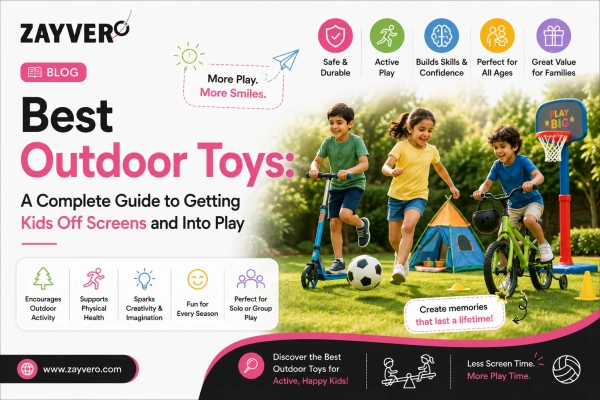
Outdoor play does something indoor toys simply can't replicate — it gives kids room to run, climb, throw, and burn off the kind of energy that no living room, however well-organised, can fully contain. But not every outdoor toy is worth the space it takes up in your garden or balcony. This guide breaks down what actually makes an outdoor toy worth buying, how to choose the right ones by age, and how to keep them safe and lasting through repeated sun, rain, and rough play.
Why Outdoor Play Matters So Much
Before getting into specific toys, it's worth understanding why outdoor play deserves a dedicated place in a child's routine, not just an occasional weekend activity.
Gross motor development. Running, jumping, climbing, and balancing build large muscle groups and coordination in ways that indoor, seated play simply can't match. These are foundational physical skills that support everything from sports later on to basic everyday coordination.
Unstructured problem-solving. Outdoor environments are less predictable than a living room floor — uneven ground, changing weather, other kids to negotiate with. This unpredictability forces a kind of flexible, real-time problem-solving that structured indoor toys rarely demand.
Better sleep and mood regulation. Physical activity and natural light exposure are both strongly linked to better sleep quality and mood regulation in children, making outdoor play one of the simplest, lowest-cost tools for managing an overtired or restless child.
Social skill-building. Outdoor play, especially with other kids, involves more negotiation, turn-taking, and rule-making than most indoor toys require, since there's rarely a fixed set of instructions to fall back on.
Core Categories of Outdoor Toys
1. Active/Gross Motor Toys
Balls, skipping ropes, hula hoops, and simple obstacle-course equipment fall into this category. They're inexpensive, take up little storage space, and scale easily across almost every age group, from toddlers learning to kick a ball to older kids organising their own games.
2. Water Play Toys
Water guns, splash pads, and sprinklers are especially popular during warmer months and combine physical activity with sensory play. We've covered water-specific picks in more depth in our guide to best water guns for summer, including how to choose the right size and capacity by age.
3. Wheeled Toys
Tricycles, scooters, and balance bikes build coordination, balance, and confidence, and tend to be used consistently over long stretches of time rather than being a passing interest. They're a bigger investment than most outdoor toys but generally deliver correspondingly higher long-term play value.
4. Sand and Garden Play
Sandpits, digging sets, and simple gardening tools introduce sensory play and an early sense of cause-and-effect through digging, pouring, and building — similar in developmental value to indoor sensory toys, just scaled up for outdoor mess tolerance.
5. Climbing and Structural Play
Swing sets, climbing frames, and slides offer some of the richest physical development value of any outdoor toy category, but they also require the most space, the most upfront investment, and the most attention to installation and safety.
6. Sports Equipment
Mini basketball hoops, cricket sets, and badminton kits introduce structured play with rules, which becomes increasingly appealing as kids move from toddlerhood into early school age and start enjoying more organised games with siblings or friends.
Choosing Outdoor Toys by Age
1–2 years: Focus on simple push-and-pull toys, soft balls, and basic sensory play like sand or water tables. Supervision needs are highest at this stage, so toys should be simple enough to use safely with minimal setup.
3–4 years: Tricycles, larger balls, simple water toys, and beginner climbing equipment (low, soft-surfaced) become appropriate. This is often the age where a first tricycle or balance bike gets introduced.
5–7 years: Scooters, bicycles with training wheels, more advanced water play (like higher-capacity water guns), and basic sports equipment suit this stage well. Kids at this age also start enjoying rule-based games more, making simple sports sets a strong fit.
8+ years: Kids can generally handle more advanced equipment — two-wheeled bikes without training wheels, more competitive sports gear, and outdoor games with more complex rules, often played in groups rather than one-on-one with a parent.
What to Look For in a Quality Outdoor Toy
Weather Resistance
Outdoor toys are, by definition, exposed to sun, rain, and temperature swings far more than indoor toys. Look for UV-resistant plastic (which won't become brittle or fade quickly under direct sun) and rust-resistant metal components on anything with a metal frame.
Stability and Safety on Uneven Ground
Unlike an indoor floor, gardens, balconies, and parks are rarely perfectly flat. Wheeled toys and climbing equipment should have a stable, low centre of gravity to reduce tipping risk on slightly uneven or sloped surfaces.
Easy Cleaning
Outdoor toys inevitably get dirty — mud, grass stains, sand. Toys with simple, hose-washable surfaces and minimal small crevices (where dirt and moisture can get trapped) tend to stay usable and hygienic for far longer than more intricately detailed alternatives.
Storage Considerations
Larger outdoor toys need somewhere to live when not in use, ideally somewhere sheltered from direct weather exposure to extend their lifespan. Before buying anything large — a climbing frame or a big wheeled toy — think through where it will realistically be stored, not just where it will be used.
Outdoor Toy Safety Checklist
- Check age and weight limits on wheeled toys and climbing equipment, and don't assume a slightly older child can safely handle equipment rated for a younger, lighter age group in reverse.
- Inspect for sharp edges or pinch points, particularly on folding or collapsible equipment like some tricycles and portable climbing sets.
- Confirm UV-stable materials for anything left outdoors regularly, since degraded plastic can become brittle and crack unexpectedly after prolonged sun exposure.
- Always supervise water play, even with shallow splash pads or paddling pools — active supervision remains essential regardless of how "safe" the specific toy is marketed as being.
- Check surface safety under climbing equipment — grass, sand, or rubber matting significantly reduces injury risk compared to concrete or hard-packed ground.
Building an Outdoor Play Routine
Owning outdoor toys doesn't automatically translate into regular outdoor play — building it into a routine matters just as much as the toys themselves.
Set a consistent daily window. Even 20–30 minutes of predictable outdoor time, built into the daily routine, tends to get used far more consistently than an occasional, unplanned "let's go outside" prompt.
Rotate toys seasonally. Water toys in summer, more active running games in cooler months — matching outdoor toys to the season keeps outdoor time appealing year-round rather than limited to a few warm months.
Involve other kids when possible. Many outdoor toy categories — sports equipment, water play, active games — become significantly more engaging with a sibling, friend, or even a parent joining in, rather than solo play.
Keep transitions low-friction. If outdoor toys are stored somewhere easily accessible — not buried in a shed or a high shelf — kids are far more likely to initiate outdoor play independently, without needing an adult to retrieve equipment first.
Common Mistakes When Buying Outdoor Toys
Overbuying large equipment too early. A full climbing frame or large trampoline is a significant investment that's easy to underuse if a child isn't developmentally ready for it yet. Starting smaller and scaling up as interest and ability grow tends to be a more reliable use of budget.
Ignoring storage and weather exposure. Toys left outdoors permanently, without any weather protection, degrade far faster than their indoor counterparts — even ones marketed as "weatherproof" generally benefit from some level of cover when not in active use.
Underestimating supervision needs. Some outdoor toys — particularly water play and climbing equipment — require more active, hands-on supervision than parents initially expect, especially in the first few uses before a child fully understands how to use the equipment safely.
Choosing based on size of yard alone. A small balcony or courtyard can still support meaningful outdoor play with the right toy choices — simple active toys, water play, and sports equipment often work well in compact spaces, even without room for large structural equipment.
Balancing Outdoor Toys With Existing Toy Categories
Outdoor toys work best as part of a broader, varied toy collection rather than a completely separate category. A few natural pairings worth considering:
Wheeled toys and active play toys reinforce each other. A child confident on a tricycle or scooter often develops the balance and coordination that makes other active toys — like a mini sports set — easier to pick up later.
Water play often overlaps with sensory and creative play indoors. Kids who enjoy digging, pouring, and splashing outdoors frequently show similar interest in sensory bins or building toys indoors, since the underlying appeal — hands-on, tactile exploration — carries across both settings.
Rotate indoor and outdoor toys by weather, not by preference. On rainy or extremely hot days, having an indoor equivalent activity ready (even something as simple as building blocks or a puzzle) helps maintain an active play routine without depending entirely on outdoor conditions.
Seasonal Outdoor Toy Planning
Thinking about outdoor toys by season, rather than buying everything at once, tends to keep the collection feeling fresh and relevant throughout the year.
Summer: Water play toys are the obvious priority here — this is peak season for water guns, splash pads, and sprinklers, when kids get the most genuine use out of them.
Monsoon/rainy months: Outdoor play understandably drops, but covered spaces like a balcony or veranda can still support light active play — soft balls, simple games — during dry windows between rain.
Winter/cooler months: This is often the best season for more physically demanding play — running games, wheeled toys, and sports equipment — since kids can be more active for longer without overheating.
Year-round: Sand and garden play, along with basic active toys like balls and skipping ropes, tend to work consistently across seasons, making them a reliable core of any outdoor toy collection regardless of time of year.
Frequently Asked Questions
How much outdoor playtime do kids need daily? Most child development guidance suggests at least 60 minutes of active outdoor play daily for school-age children, though younger children benefit from shorter, more frequent outdoor sessions throughout the day.
What outdoor toys work best for small spaces like balconies? Water play toys, simple ball games, and compact sensory activities like a small sand tray tend to work well in limited space, since they don't require the large footprint that climbing equipment or trampolines need.
How do I keep outdoor toys from degrading in the sun? Choose toys made from UV-resistant materials where possible, and store equipment in a shaded or covered area when not in active use to slow down sun-related wear and brittleness over time.
Are wheeled toys safe without a helmet? Helmets are strongly recommended for any wheeled toy — tricycles, scooters, and bikes alike — even at slower speeds and in seemingly low-risk areas like a garden or driveway, since falls can happen unexpectedly even during casual play.
What's a good first outdoor toy for a toddler? A simple push-and-pull toy, a soft ball, or a small sand and water table tends to work well as a first outdoor toy, since these require minimal coordination and offer immediate, easy-to-understand feedback.
Final Thoughts
The best outdoor toys aren't necessarily the biggest or most expensive — they're the ones that genuinely get used, season after season, because they match your child's current age, space, and interests. Starting with a few well-chosen pieces and building the collection gradually tends to deliver far more consistent play value than one large, upfront purchase.
Browse Zayvero's full Outdoor Toys collection, or visit Outdoor Play to find options filtered by age and activity type. Shop Now →