Rocking Chair vs Rocker: Which One Does Your Baby Actually Need?
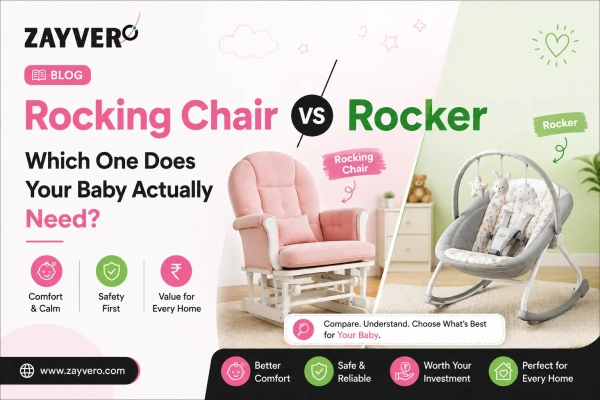
If you've started shopping for nursery furniture, you've probably run into two products that sound almost identical but serve very different purposes: the rocking chair and the rocker. Parents often assume they're interchangeable — buy one, and you've covered both bases. In reality, they're built for different situations, different ages, and often different rooms in the house entirely.
This guide breaks down exactly what separates a rocking chair from a rocker, which one your baby actually needs first, and how to decide if you eventually need both.
What Is a Baby Rocker?
A baby rocker is a small, portable seat designed to hold your baby — not you. It usually has a curved base or a manual/motorized rocking mechanism, a harness to keep your baby secure, and is meant for babies from newborn age up to around 6 months, or until they can sit up unassisted.
Rockers are typically used for:
- Giving your baby a safe place to rest while you're nearby but hands-free
- Soothing a fussy baby with gentle motion
- Naps during the day (not overnight sleep — rockers aren't a substitute for a crib or bassinet)
- Feeding time, tummy time breaks, or supervised play
Because they're lightweight and often foldable, rockers move easily from room to room — kitchen, living room, even outdoors on a covered porch — which is part of why they're such a popular first purchase for new parents.
What Is a Rocking Chair?
A rocking chair, in the nursery context, is furniture built for the parent — not the baby. It's a full-sized chair, usually padded, designed for feeding, soothing, and bonding sessions where an adult sits and rocks while holding the baby.
Rocking chairs (and their cushioned cousins, gliders) are typically used for:
- Late-night and early-morning feeds
- Soothing a crying baby to sleep before transferring them to a crib
- General bonding time — reading, singing, or simply holding your baby
- A permanent nursery fixture that stays useful well beyond infancy, often through toddlerhood and even later as a regular reading chair
Unlike a rocker, a rocking chair isn't something your baby sits in alone. It's a piece of furniture you use with your baby, and it usually stays in the nursery for years rather than getting folded away once your child outgrows a particular stage.
Rocking Chair vs Rocker: The Core Differences
Feature Baby Rocker Rocking Chair Who sits in it The baby The parent (holding the baby) Typical age range Newborn to ~6 months Used throughout infancy and beyond Portability Lightweight, often foldable Stays in one place, usually the nursery Primary use Independent resting, soothing, naps Feeding, bonding, soothing before sleep Longevity Outgrown within months Useful for years Price range Generally lower Generally higher, especially padded gliders Once you see them side by side, it's clear these aren't competing products — they solve two completely different problems at two completely different moments in your day.
Which One Should You Buy First?
If you're working with a tight budget or limited nursery space, this is usually the deciding question. Here's how most parents end up prioritizing:
Buy a rocker first if: You need a safe, hands-free spot to place your baby during the day — while you shower, prep meals, or manage an older sibling. Rockers solve an immediate, practical problem in the first few months.
Buy a rocking chair first if: You already have a safe spot for your baby to nap (a bassinet or crib) and your priority is a comfortable place for feeding and nighttime soothing. Many parents find the rocking chair becomes the single most-used piece of furniture in the entire nursery, especially during the newborn stage when feeding happens every 2–3 hours around the clock.
In practice, most families end up with both eventually — the rocker solves the "where do I put the baby down safely" problem, while the rocking chair solves the "I need to comfortably hold and soothe my baby for long stretches" problem. They're rarely used at the same time, so there's no redundancy in owning both.
Safety Features to Check Before Buying
For a Baby Rocker
- Secure harness: A 3-point or 5-point harness is essential — never leave a baby in a rocker without it buckled.
- Stable base: The rocker shouldn't tip or slide on smooth flooring, even with an active baby moving inside it.
- Age and weight limits: Always check the manufacturer's listed limits and stop use once your baby exceeds them, even if they still technically fit.
- Firm, flat recline for newborns: Extremely reclined or overly soft rockers aren't recommended for unsupervised newborn sleep — rockers are for supervised rest, not overnight sleep.
- Easy-clean fabric: Removable, washable covers save a huge amount of hassle given how often rockers get used.
For a Rocking Chair
- Smooth, controlled motion: The rocking or gliding mechanism shouldn't jerk or move unpredictably, especially important when you're holding a baby.
- Adequate armrests: Proper arm support matters during long feeding sessions — this is more of a comfort factor than a strict safety one, but it affects how sustainable the chair is for daily use.
- Sturdy frame: Since this chair will support both an adult and a baby's combined weight repeatedly over years, frame quality matters more here than on almost any other nursery item.
- Non-tip base: Especially important once your baby becomes an older toddler who may try to climb onto the chair unsupervised.
Do You Need Both, or Can You Get Away With One?
If budget or space genuinely only allows for one item, think about your daily routine rather than following a generic recommendation. Parents who spend more time settling a baby to sleep through feeding and rocking tend to get more mileage out of a rocking chair. Parents managing a busy household with older kids, pets, or frequent hands-free tasks tend to lean on a rocker more heavily during the first few months.
It's also worth noting that a rocker is a short-term purchase by design — most babies outgrow it well before their first birthday. A rocking chair, by contrast, tends to be a multi-year investment that often outlasts the nursery stage entirely, sometimes becoming a permanent reading chair in a child's room long after infancy.
Budget Considerations
Rockers tend to fall into a lower price bracket and are a reasonable first purchase if you're setting up a nursery on a budget. Rocking chairs and gliders, especially padded or motorized versions, sit at a higher price point given the larger frame, upholstery, and mechanism involved.
If you're comparing options within a specific budget, it helps to browse by price range rather than by product name alone, since features can vary significantly even within the same category. For higher-end, fully-featured pieces — think premium upholstery, motorized gliding, or built-in USB charging — it's worth checking options in the premium toys and baby gear range before settling on a model.
Caring for Your Rocker or Rocking Chair
Rockers: Wipe down the frame regularly and remove the seat cover for a proper wash every few weeks, especially if it's used daily for naps or feeding. Check the harness buckle periodically to make sure it hasn't loosened or worn out.
Rocking chairs: Vacuum upholstered cushions weekly to prevent dust buildup, and spot-clean fabric as needed. Wooden or metal frames should be checked every few months for loose screws or joints, particularly on gliders with a moving mechanism.
Common Mistakes Parents Make When Choosing Between the Two
Assuming a rocker is a sleep solution. This is the most common and most important mistake to avoid. Rockers are for supervised, awake-to-drowsy moments — not for putting a baby down to sleep unsupervised. If your baby falls asleep in the rocker during a nap, the safest practice is to move them to a proper crib or bassinet once you notice they've drifted off.
Buying the rocking chair last. Many first-time parents focus their nursery budget on the crib, changing table, and rocker, treating the rocking chair as an optional "nice to have." In practice, it often becomes the piece of furniture used most frequently in the first few months, simply because of how often newborns feed and need soothing.
Choosing style over function. It's easy to pick a rocking chair based on how it looks in the nursery rather than how it actually feels during a 40-minute late-night feed. Before buying, think about armrest height, seat depth, and how the chair supports your back — comfort matters far more once you're using it multiple times a day.
Overlooking noise level. A squeaky rocker base or a glider mechanism that clicks with every motion can undo all your soothing efforts by waking a baby who's just settled. This is worth checking in person, or reading reviews closely, before committing to a specific model.
How Motion Helps Babies Settle
Both products rely on the same underlying principle: rhythmic motion mimics the movement babies experienced constantly in the womb, which is why gentle rocking is one of the most reliable ways to calm a fussy or overstimulated baby. The difference is simply how that motion is delivered — a rocker provides it independently through its own mechanism, while a rocking chair delivers it through a parent's controlled, responsive movement, which many babies find even more calming because it's paired with physical closeness, warmth, and a familiar heartbeat rhythm.
This is also why many parents notice a baby settles faster in a rocking chair during an overtired, overstimulated meltdown, while a rocker tends to work better for maintaining an already-calm state during routine daytime rest.
Frequently Asked Questions
Can a rocker replace a bassinet for naps? No. Rockers are designed for short, supervised rest periods — not unsupervised sleep. A bassinet or crib remains the recommended safe sleep environment for naps and overnight sleep.
At what age should we stop using a baby rocker? Most manufacturers set the limit around the point a baby can sit up unassisted or reaches a specific weight limit, typically somewhere between 4 and 9 months depending on the model. Always defer to the specific product's listed guidelines.
Is a glider better than a traditional rocking chair? Gliders move on a fixed track rather than a curved rocker base, which some parents find smoother and quieter — useful for not waking a baby who's just fallen asleep. It comes down to personal preference more than a clear safety advantage either way.
Do we really need both a rocker and a rocking chair? Not necessarily, but many families find they solve different problems well enough that both get regular use — the rocker for hands-free daytime rest, the rocking chair for feeding and bedtime soothing.
What should first-time parents prioritize buying? If you can only choose one item to start, most parents find a comfortable rocking chair gets used most consistently in the earliest weeks, since feeding and soothing happen far more often than needing a hands-free spot to set the baby down.
Final Thoughts
A rocker and a rocking chair aren't competing for the same job — one gives your baby a safe, independent spot to rest, and the other gives you a comfortable place to feed, soothe, and bond. Understanding that distinction before you shop makes the decision far easier, and helps you avoid buying the wrong item for the stage you're actually in.
Browse Zayvero's full range of baby gear, or head straight to Baby Essentials to filter options by your baby's current age and stage.
If you're also stocking up on comfort items for the nursery, our guide on why kids love plush toys covers how soft, familiar toys support a baby's sense of security — a useful companion piece to nursery furniture like this.